Tuesday, March 25, 2008

Sweat and boats

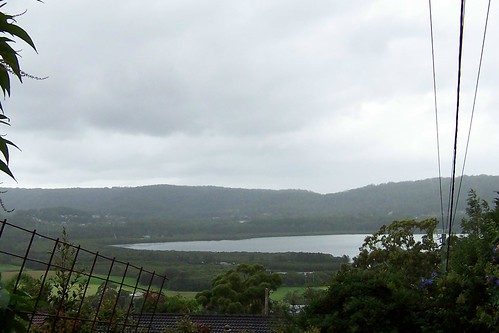
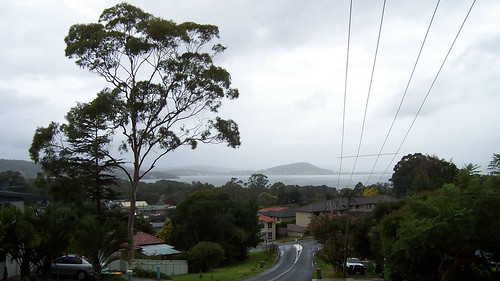
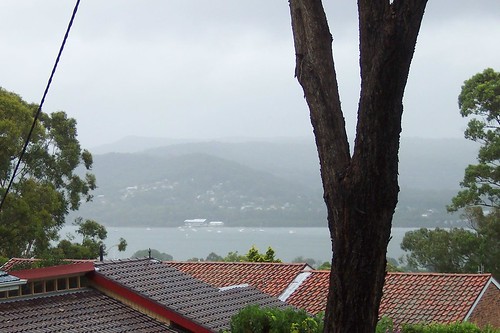
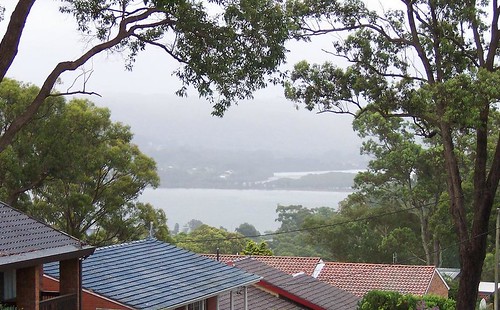
Arsed about this morning and never made it on a ferry walk. Not that it mattered in the end. The light was so bad all the view photos I was going to take would've been crap. So I walked round the foreshore a bit, got very hot and sticky and came home early. Hope that bloody storm shows tonight.


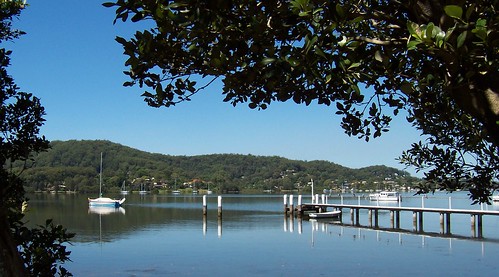
Woy Woy Channel Woy Woy

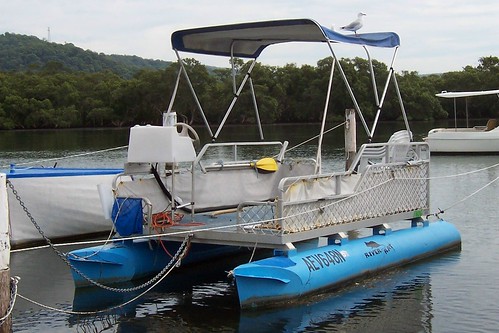
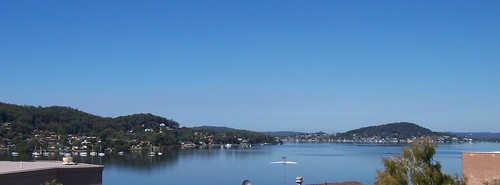
Platform boat in Woy Woy Channel just behind the Bowls (Woy Woy Bowling Club). Is there some boaty type reading who can tell us if this is purely for fishing in calm channels or what?


Woy Woy Channel Woy Woy

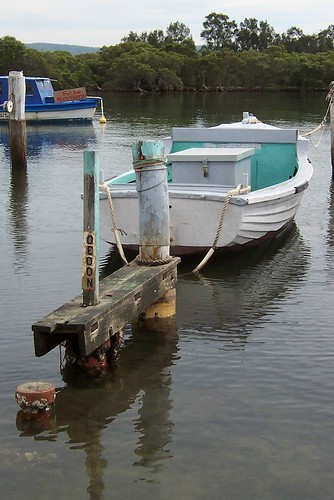
The jetty you have when you're not having a jetty. There were a good dozen like this, in a crowded spot near the Bowls.


Woy Woy Channel Woy Woy

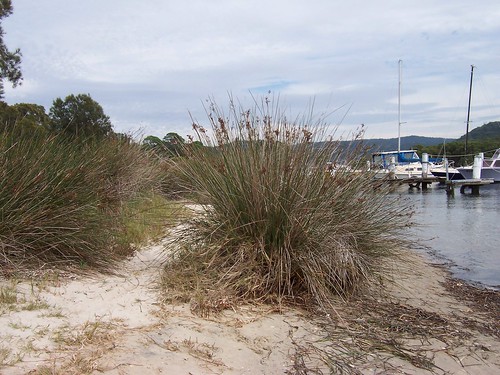
Don't know if this reedy plant is native to the area but it grows here and there along the channels and creeks of Woy Woy and Brisbane Water. Whatcha think, Erica?


Woy Woy Channel Woy Woy

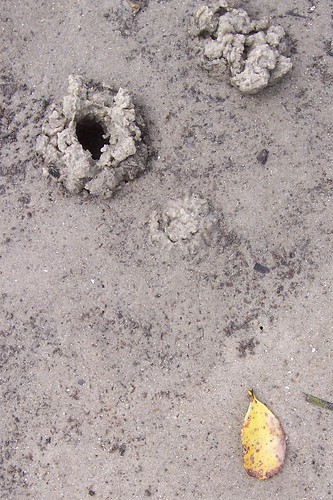
Crabs. Crab holes anyways. I think they only come out at dawn or at night. Never seen them during the day.


Woy Woy Channel Woy Woy

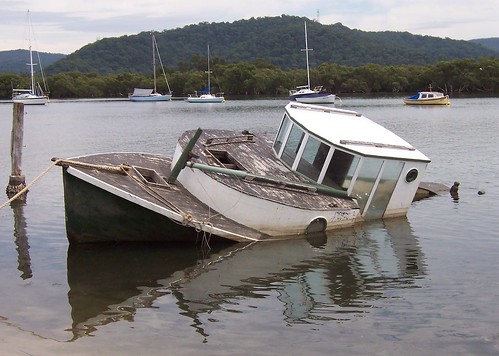
Is this your sunken treasure? Looks like a nice old wooden boat.

It too is just behind the Bowls in the Woy Woy Channel.


Woy Woy Channel Woy Woy

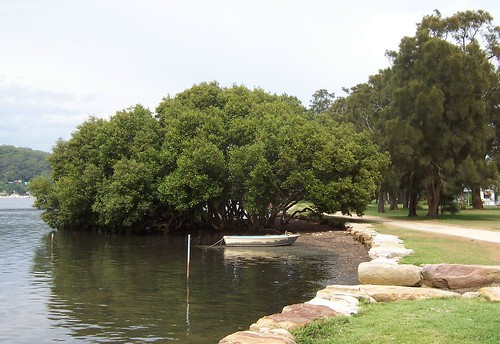
Ah, the old dingy and mangroves photo. How do I love thee? Let me count the ways.

This one's on the foreshore between Brick Wharf and Blackwall Mountain.

Notice the nice pines on the right. They make a beautiful soft rushing sound in the wind.


Tell you what, it's getting bloody dark now at 3.40. Hope it pisses--Yep, it's pissing down. Smells great.

Thursday, March 20, 2008

The Easter Wombat

No walkies today. I am not feeling terribly sprightly. Nothing major.


Easter Wombat

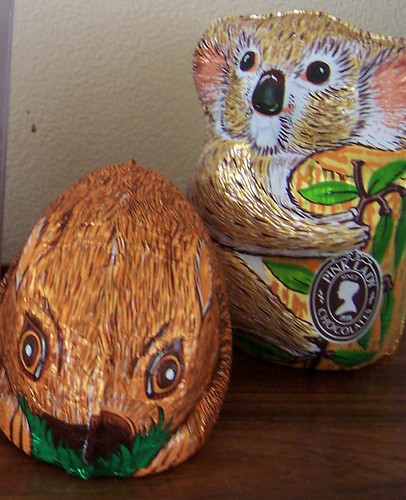
Easter this year has been out-sourced and will be brought to you by the Easter Wombat and his long-time companion the Easter Koala.

Russell's Burrow and other wombat sites list three species of wombat, the Common Wombat, the Southern Hairy Nosed Wombat and the Northern Hairy Nosed Wombat. But every true Straylyan knows there's a fourth species: the Fat Arsed Wombat.

Happy Easter, peeps. May you burrow deep and find many tender leaves!

Tuesday, March 18, 2008

Paperbark Forest

(Random walkies in Woy Woy)

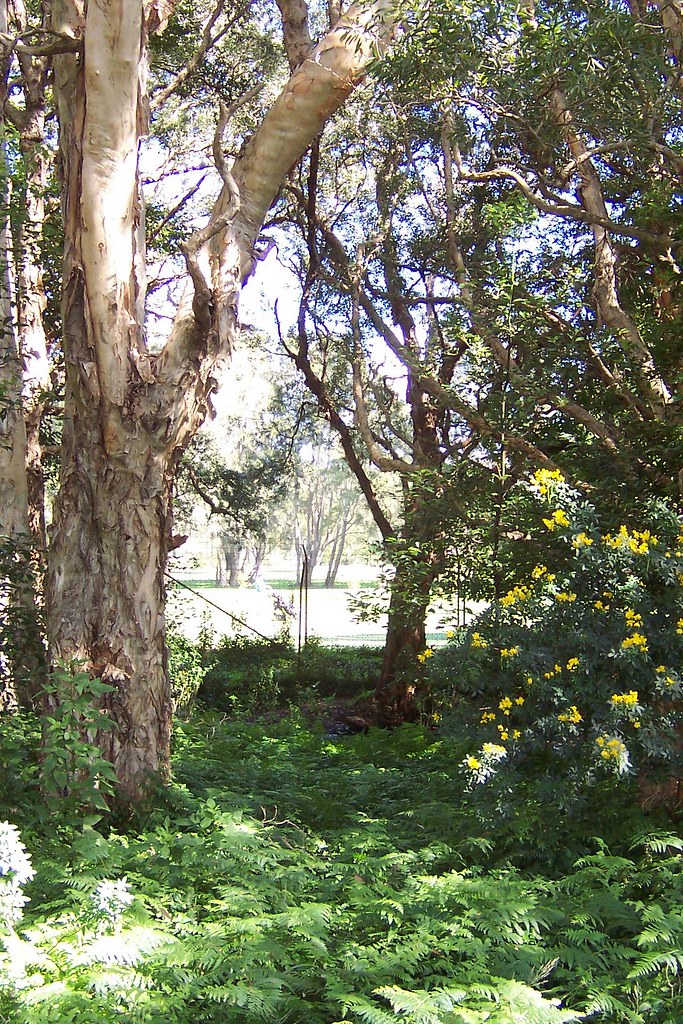
The Paperbark Forest is one of my favourite spots on the Peninsula. It's official name is the Everglades Lagoon Wetland, because it's next to the Everglades golf course.

The area of Woy Woy South the forest and the golf course are in was pretty boggy and swampy before it was developed for housing and golf. The streets on the northern side of the golf course are named Florida Avenue, Miami Avenue and Everglades Crescent, the street trees are paperbarks and the lanes behind the houses are ditches instead of the usual drive-able lanes.


Everglades Lagoon Wetland Kerrawah Blvd Woy Woy
Bigger, bushier

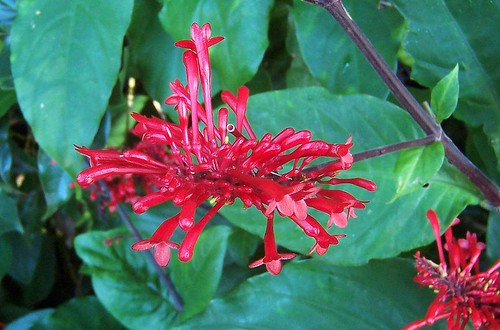
Strange red flowers on a large bush on the edge of the forest.


Everglades Lagoon Wetland Kerrawah Blvd Woy Woy
Bigger

The golf course visible through the thin end of the forest. It was a warm clear day and the golfers were puttering about happily and stopping for a yack in the shade of the trees.

The trees on the golf course are mainly paperbarks and banksias, plus some pines up the Veron Road end.


Paperbark Forest Kerrawah Blvd Woy Woy
Bigger

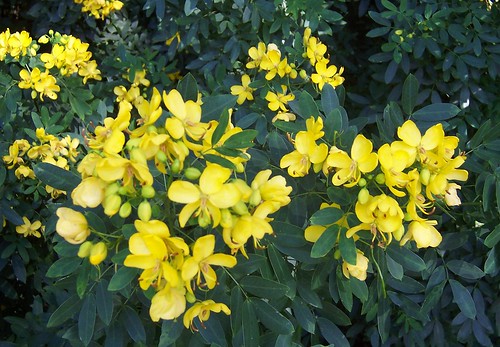
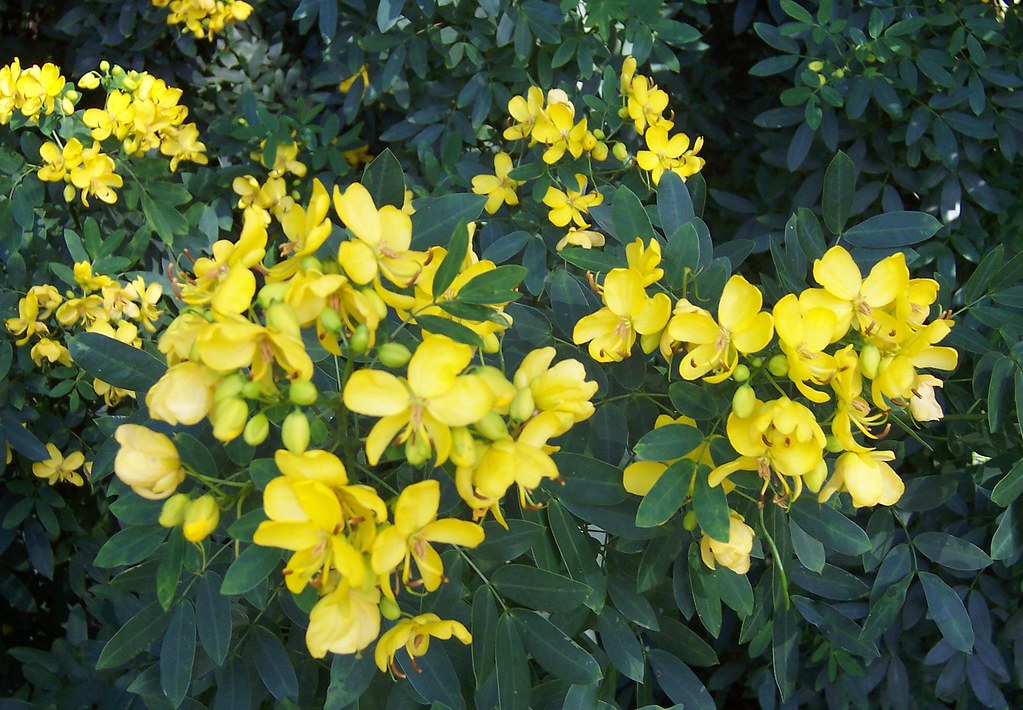
Yellow whatsit bush. Broom, I think someone said last week.


Paperbark Forest Kerrawah Blvd Woy Woy
Bigger

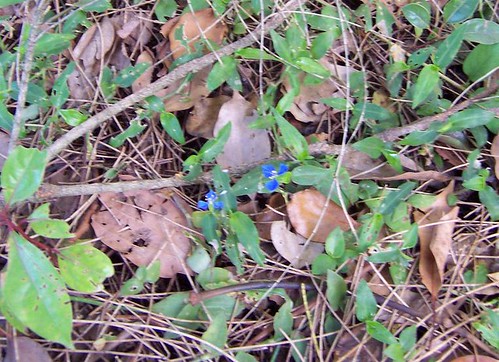
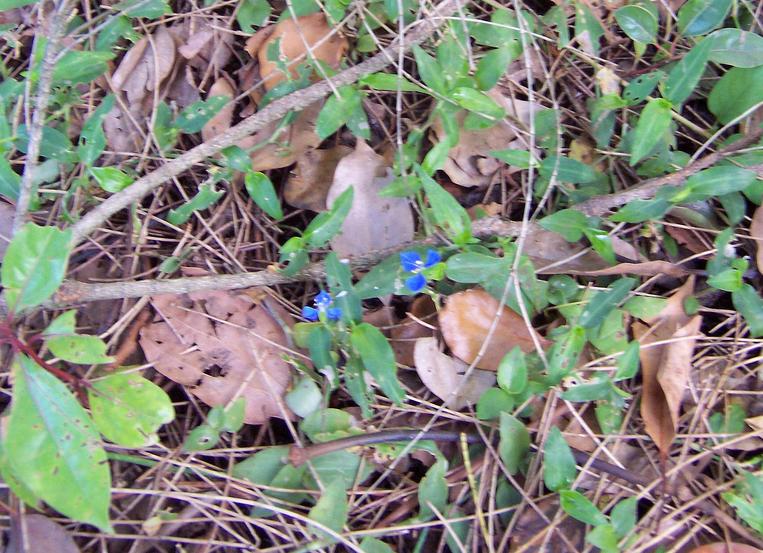
Wee blue flowers on the forest floor. Don't think they're native.


Paperbark Forest Kerrawah Blvd Woy Woy
Bigger

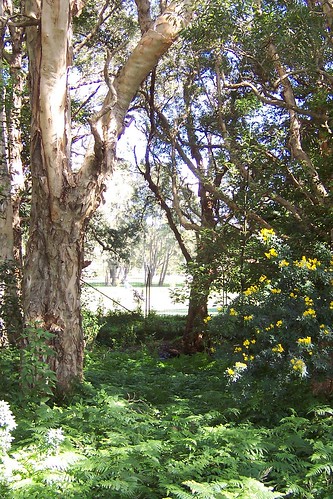
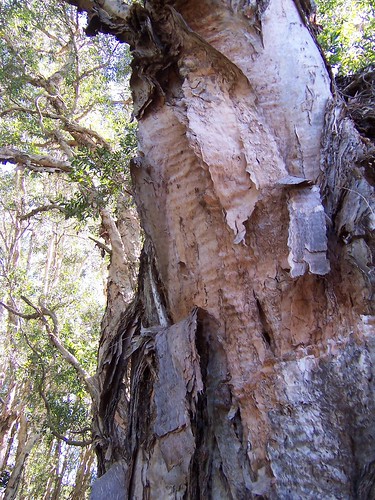
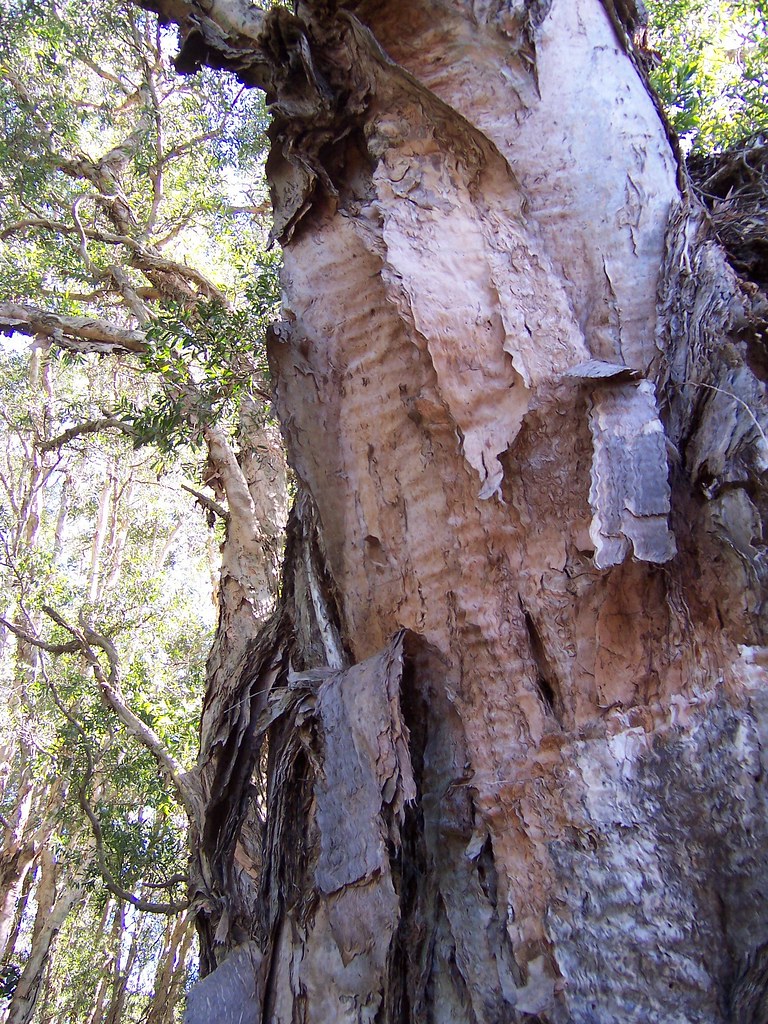
Sheets of paperbark bark slowly peel from the trees, hanging down all through the forest.


Paperbark Forest Kerrawah Blvd Woy Woy
Bigger

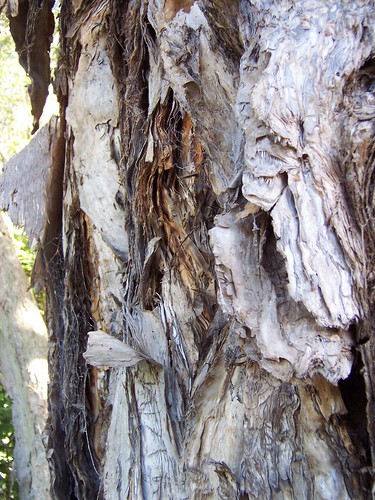
The bark is layers and layers of sheets as thin as onion skin with string strips between them.


Paperbark Forest Kerrawah Blvd Woy Woy
Bigger

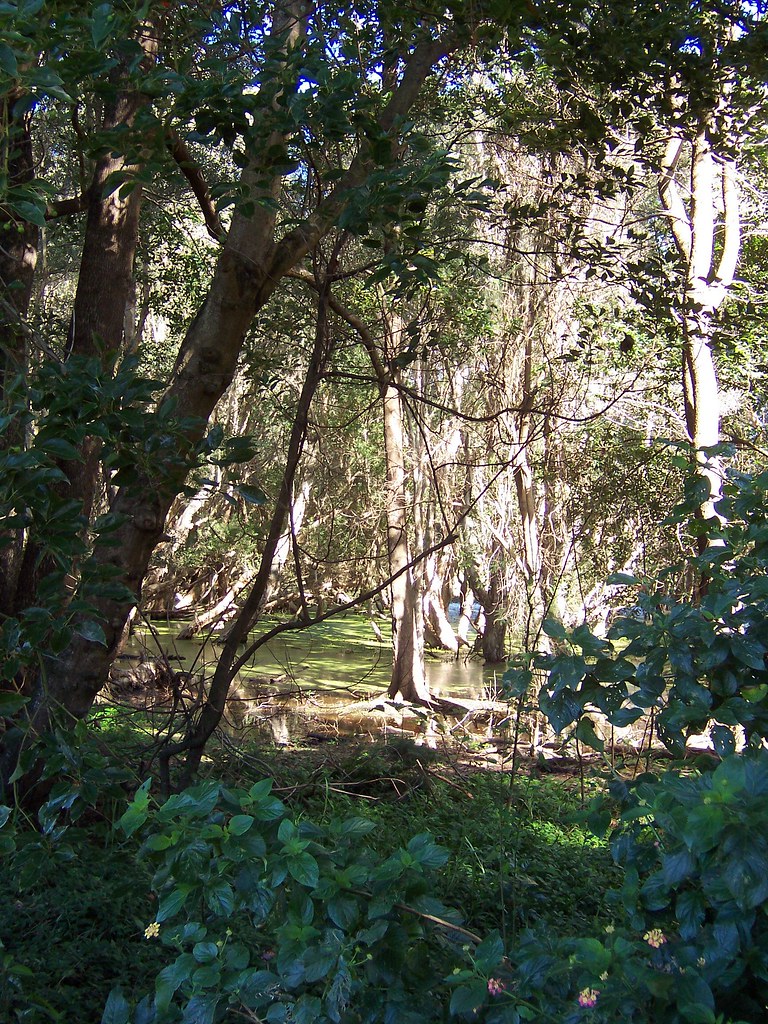
Into the forest, with the glint of the lagoon visible through the trees.


Paperbark Forest Kerrawah Blvd Woy Woy
Bigger

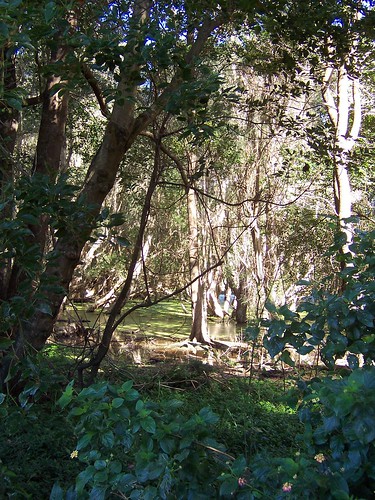
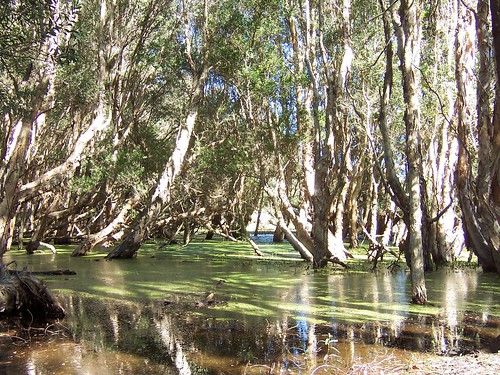
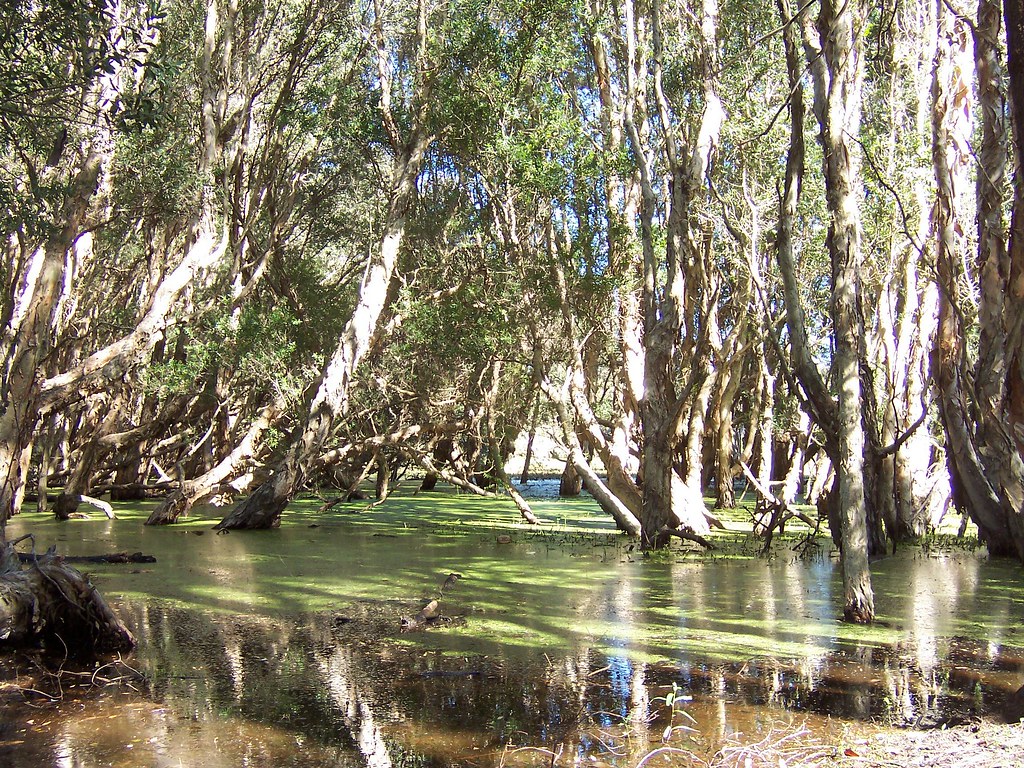
The lagoon after La Nina's rain. Still and silent, but teeming with life. A lovely green jewel in a tiny hidden forest.

Other than the occasional cry of victory or despair from the golf course, it's quiet and still and only the sound of a bird slowly wading and the breeze in the crowns of the trees can be heard.

Paperbark Forest in 2005


Sydney & Kormoran found

Australia's great wartime mystery solved. The wrecks of the German warship Kormoran and HMAS Sydney have been found at last, off the coast of Western Australia. It's been 66 years snce all those boys, ours and theirs, were lost.

Kormoran on Wiki (Deutsch)

Sydney on Wiki

HMAS Sydney II and the Kormoran

HMAS Sydney website

SMH Faces of the lost found at last - SMH slideshow of the men who went down on her*

Video

Remembering life on board HMAS Sydney II

HMAS Sydney piped home in Geraldton

Historic protection for HMAS Sydney, Kormoran


* Who were aboard her when she sunk! What filthy minds you buggers have.

Thursday, March 13, 2008

Loos with a view

(Random walkies in Woy Woy)

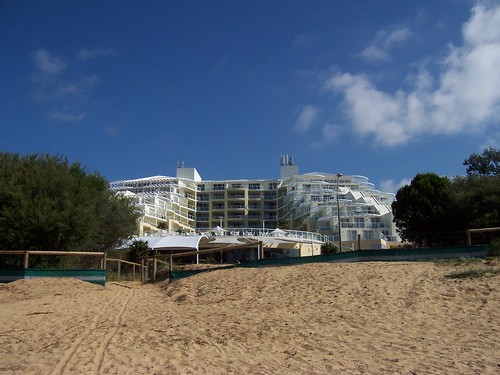
The bulldozer returneth. The local rag reports that bulldozing of the dune vegetation at Ettalong is going ahead after all. The vegetation is right in front of The Excrescence and when it's gone it will push up the price on those rooms they're always trying to flog on their middle floors. (The Excresence is the over-sized white building below).


Loos & dunes Ettalong Beach

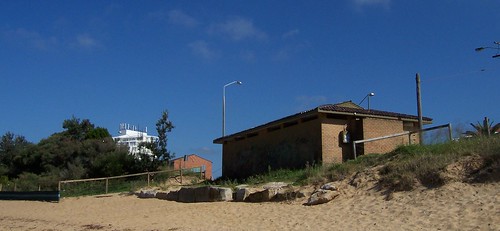
I am bloody annoyed about the dunes being menaced. However, the bulldozer may do its worst on this fugly block of seventies toilets at the end of the dunes. They are used by no-one by the drunk and the desperate.

Locals, the loos are at the end of Picnic Parade, down beside the pub and barely 5 yards from this lovely bungalow.


Vegetated dunes at Ettalong Beach

The vegetation causing all the angst.

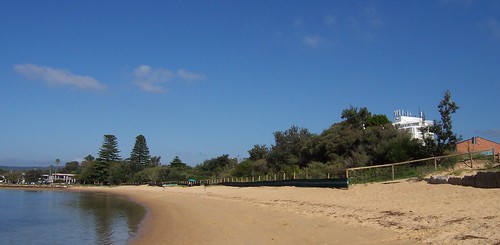
The white blob on the right behind the dunes is The Excrescence. Its view is partly obscured by the vegetation. The red brick building is in fact the purple and orange motel on The Esplanade. Its view is almost entirely blocked by the vegetation.


Dune vegetation Ettalong Beach

Native plants holding the sand down and stopping it from being blown into the streets and buildings behind.

The clump of trees on the left are tea trees. I love tea trees. They're twisty and they've got beautiful rough silvery bark and tiny waxy flowers and can take a shitload of wind and salt air.


The Excrescence as seen from Ettalong Beach

The Excrescence as seen from Ettalong Beach.

The top half of the bastard has water views, the cafe, bar, etc doesn't. Hence the desire to rip out the dune vegetation and build "viewing platforms". The vegetation growing on the dunes prevents the beach sand from constantly being blown up into Ettalong's main streets (just behind the Excrescence), the "viewing platforms" most likely will not.


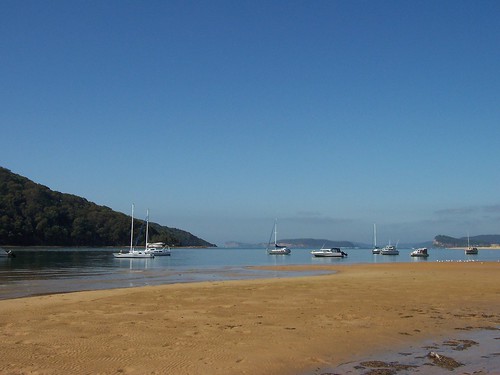
Low tide at Ettalong Beach

The desired view.

Wagstaffe coming in from the left in the middle distance, to its right is a distance cliff, which I'm assured is Manly. To the right of Manly is Barrenjoey Head, then Pittwater to its right then Lion Island.

It was low tide and the sand was pitted with tiny crab holes. The sea gulls were lined up along the edge of the water (right edge of photo). Don't know what they were waiting for. Don't know much about seagulls, except they shit on everything and steal your chips. Other than that, they're orright.

Tuesday, March 11, 2008

Zoom with a view

(Random walkies in Woy Woy)

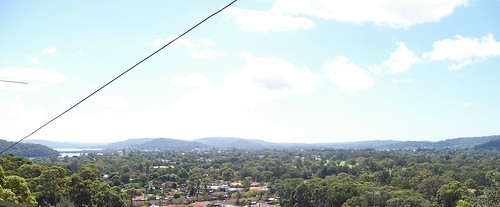
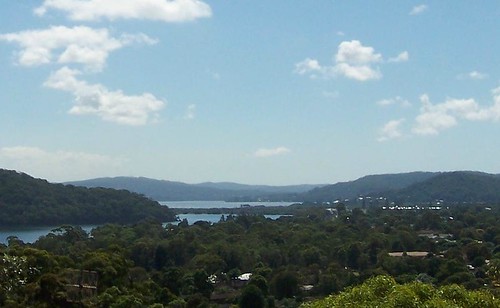
Been bloody tired the last couple of weeks. That blasted lethargy thing again. Feeling a bit perkier today so I went up a hill to re-photograph some views I snapped on another sunny day in 2005 and in 2006 when it was pissing down raining and the views were soft and misty.


Woy Woy Peninsula & Brisbane Water from Timbertop Drive Woy Woy
Embiggen

The Peninsula dozing under the warm autumn sun.

Phegans Bay & Brisbane Water in the distance on the left. Stretching across on the right to Kincumba Mountain and, in front of it, a dark corner of Blackwall Mountain.

Map


Phegans Bay & Brisbane Water from Timbertop Drive Woy Woy

Phegans Bay & Brisbane Water.

Left to right: Phegans Bay. To the right of it is what looks like Rumbalara Reserve which is the hill the east side of Gosford. The furtherest hill has got to be up around Wyoming or Lisarow. Could be The Ridgeway. On the right edge of the picture is Saratoga and behind it is the flattish top of Kincumba Mountain.


Knobs

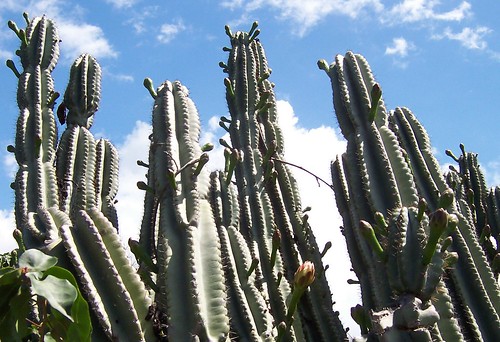
Giant cactus budding in someone's backyard. The flowers looked like they're going to come out pink. The huge one in Ettalong has pale yellow flowers.


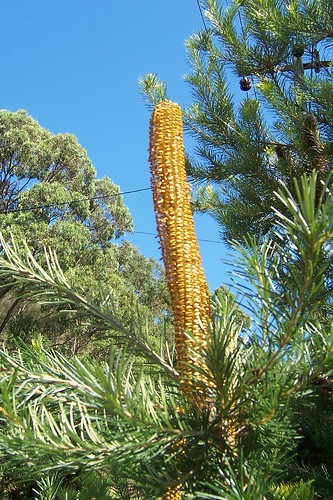
Golden dildo hakea

Here's one for yer, Device dear. Golden dildo hakea. Might actually be called giant candle.


Linkage

Australian Flora Online - one of them database thingies.


Sing along

Can't get that blasted song off the HugePuddle ad out of my head.

From Wiki
"The song "I've Been Everywhere" was written by Geoff Mack in 1959 and made popular by the singer Lucky Starr in 1962.

It listed Australian towns. It was later adapted for North American (primarily United States) place names and by John Hore (later known as John Grenell) with New Zealand place names (1966).

The song was a number 1 hit in Country Music in November 1962 in the United States for the recording artist Hank Snow. The song was also recorded by : Lynn Anderson (USA 1970); Asleep At The Wheel (USA 1973); Johnny Cash (USA 1996); the Countdown Singers; Chip Dockery; Ted Egan; the "Farrelly Brothers" from the television series The Aunty Jack Show (Australia 1974 (parody)); John Grenell (NZ 1966); Mike Ford (Canada, 2005); Rolf Harris (UK 1963); Clifton Jansky; Willie Nelson; and The Statler Brothers."


Straylyan version:

(Pommy readers should remember the U in Tullamore, Muckadilla, etc is not as in took and mook but as is smut and fuck.)

Verse 1
Tullamore, Seymour, Lismore, Mooloolaba, Nambour, Maroochydore, Kilmore, Murwillumbah, Birdsville, Emmaville, Wallaville, Cunnamulla, Condamine, Strathpine, Proserpine, Ulladulla, Darwin, Gin Gin, Deniliquin, Muckadilla, Wallumbilla, Boggabilla, Kumbarilla

Verse 2
Moree, Taree, Jerilderie, Bambaroo, Toowoomba, Gunnedah, Caringbah, Woolloomooloo, Dalveen, Tamborine, Engadine, Jindabyne, Lithgow, Casino, Brigalow, Narromine, Megalong, Wyong, Tuggeranong, Wanganella, Morella, Augathella, Brindabella

Verse 3
Wollongong, Geelong, Kurrajong, Mullumbimby, Mittagong, Molong, Grong Grong, Goondiwindi, Yarra Yarra, Bouindarra, Wallangarra, Turramurra, Boggabri, Gundagai, Narrabri, Tibooburra, Gulgong, Adelong, Billabong, Cabramatta, Parramatta, Wangaratta, Coolangatta

Verse 4
Ettalong, Dandenong, Woodenbong, Ballarat, Canberra, Milperra, Unanderra, Captains Flat, Cloncurry, River Murray, Kurri Kurri, Girraween, Terrigal, Stockinbingal, Collaroy, Narrabeen, Bendigo, Dorrigo, Bangalow, Indooroopilly, Kirribilli, Yeerongpilly, Wollondilly


Kiwi version:

The New Zealand version starts: Well I was hitching a ride on a winding Hokitika road, when along came a lorry....

First verse
Kaparoa, Whangaroa, Akaroa, Motueka, Taramoa, Benmore, Pongaroa, Horoeka, Rimutaka, Te Karaka, Whangarei, Nuhaka, Waimahaka, Motuhura, Waikaka, Motonui, Hokonui, Papanui, Wainui, Matawai, Rongotai, Pikowai

Second verse
Woodville, Dargaville, Lumsden, Katikati, Naseby, Cambridge, Porirua, Mararoa, Hastings, Tikitiki, Tauranga, Auckland, Naenae, Waitaha, Hamilton, Poroporo, Taupo, Timaru, Oamaru, Tihoi, Awanui, Wanganui, Pauanui

Third verse
Featherston, Palmerston, Woolston, Te Awamutu, Riverton, Queenstown, Picton, Ohinemutu, Morere, Korere, Rotorua, Kaikoura, Matamata, Ruakura, Ikamatua, Papakura, Waitaki, Pukaki, Taranaki, Te Kauwhata, Ropata, Ikowai, Waitemata

Fourth verse
Ruatoki, Matahura, Taupiri, Maketu, Kyeburn, Sowburn, Wedderburn, Mossburn, Washdyke, Arawhata, Paparoa, Kaponga, Teraha, Thames, Kerikeri, Kokoma, Tapanui, Porinui, Tawanui, Otahuhu, Ruatapu, Mosgiel, Whareroa

Fifth verse
Kapiti, Ngawaka, Onepu, Reporoa, Tongariro, Tomoana, Renwick, Papamoa, Karitane, Oxford, Parihaka, Karetu, Coalgate, Whitecliffs, Urenui, Mamaku, Waimea, Waharoa, Dannevirke, Ngahere, Gordonton, Kingston, Oban


Map with the Straylyan towns marked at Wiki

MP3 of the Straylyan version

Thursday, March 06, 2008

Fagans Bay

Nameless Cove in Fagans Bay on Brisbane Water

Fagans Bay is a small bay up near Gosford, one of Brisbane Water's many bays. It's a bit of a forgotten place. Even some of the people who live around it don't know what it's called.

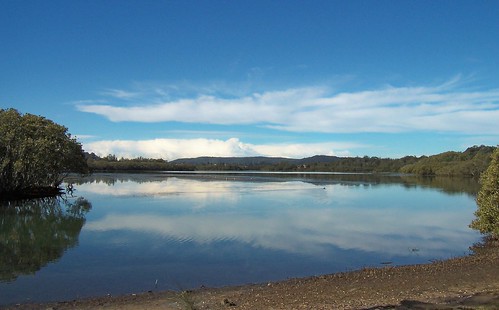
This photo shows a small cove in Fagans Bay. The bay is fringed with mangroves and has a mangrove islet within it. It's a haven for ducks and lovely to walk round.

Woy Woy to Gosford Cycleway

Only dog walkers and cyclists really notice it as they go along the cycleway. You can't really see it from the road, except on the Pacific Highway overpass next to the footy stadium.


Fagans Bay

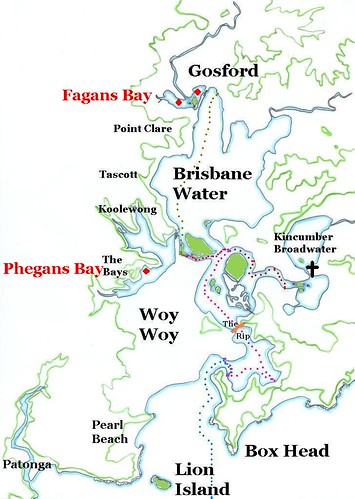
I've walked round it but never mapped it and I know how much you buggers are liking the maps, so here it is.


Fagans Bay & Phegans Bay

Fagans Bay is the banana-shaped bay at the top with the two red dots.
Phegans Bay is down the bottom left with one red dot. It is the home of the lovely pink house Minerva.


Red Cow Inn

A few hundred yards from Fagans Bay is Fagan's pub, the old Red Cow Inn. Peter Fagan owned it and Henry Kendall hung out there.


Narara Creek West Gosford


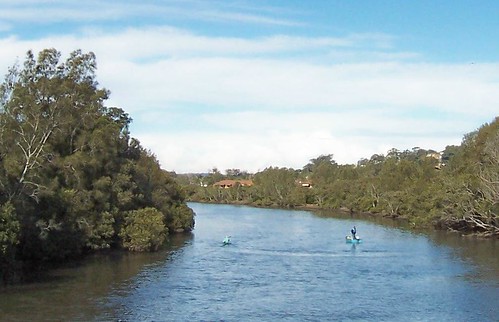
Narara Creek goes under Henry Kendall Bridge/the Pacific Highway and on into Fagans Bay. Just round that corner and yer in the bay. The kayaker, on the left, will be there in a minute.


Fagans Bay

He can paddle around amid the ducks on the calm waters of Fagans Bay or venture out into Brisbane Water and paddle down towards Woy Woy.


Sorry and Sydney history

A snippet of info about the start of Sydney.

In 1788 the First Fleet and its load of English convicts and marines arrived.

It was summer and there were plenty of fish in the harbour. The Eora, the Aboriginal people of Sydney Cove, shared their catch with the funny-looking strangers.

Then winter came and the fish stock was low, as usual. The strangers hadn't left and they were taking all the fish.

The Eora took some of the fish away from the strangers. The strangers came after them with their guns and also shot some kangaroos, which were an important source of winter meat for the Eora. The Eora took a goat, a sheep and a few lambs from the strangers' camp. The strangers came after them with their guns again.

Relations went downhill from there.

Tuesday, March 04, 2008

Peeks Point

(Gosford walkies #33, East Gosford)

My records say the last time I walked in Gosford was November 2006. Bollocks! More like November 2007.


View from Caroline Street Peeks Point
(Clicking leads to embiggening)

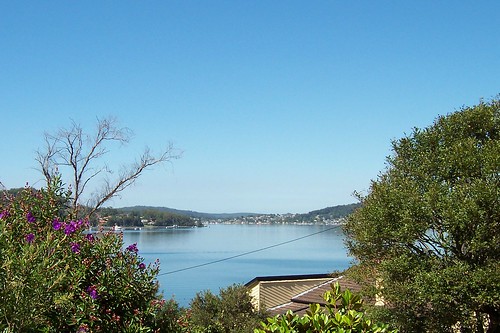
View from Caroline Street. Lovely clear day for photography today. Now that summer's over the rain has gone away.

Left to right: Rocky Point, Green Point/Kincumba Mountain behind it, Killcare in the distance, and Saratoga's Bayview Wharf area on the right.


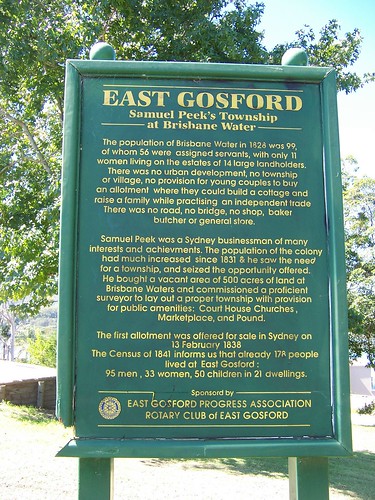
Samuel Peek's Township at Brisbane Water

The sign reads:

"East Gosford
Samuel Peek's Township
at Brisbane Water

The population of Brisbane Water in 1828 was 99 [white people],
of whom 56 were assigned servants [convicts], with only 11
women living on the estates of 14 large landholders.
There was no urban development, no township
or village, no provision for young couples to buy
an allotment where they could build a cottage and
raise a family while practising an independent trade
There was no road, no bridge, no shop, baker
butcher or general store.

Samuel Peek was a Sydney businessman of many
interests and achievments. The population of the colony
had much increased since 1831 & he saw the need
for a township, and seized the opportunity offered.
He bought a vacant area of 500 acres of land at
Brisbane Waters and commissioned a proficient
surveyor to lay out a proper township with provision
for public amenities: Court House Churches,
Marketplace, and Pound.

The first allotment was offered for sale in Sydney on
13 February 1838.
The Census of 1841 informs us that already 178 people
lived at east Gosford:
95 men, 33 women, 50 children in 21 dwellings.

Sponsored by
EAST GOSFORD PROGRESS ASSOCIATION
ROTARY CLUB of EAST GOSFORD".

Bugger all remains to be seen of the original township. The houses there now are mostly 1940s and '70s with an occasional Federation cottage like this.


View from Caroline Street park Peeks Point
(Clicking leads to embiggening)

View from the park in Caroline Street.

Left to right: Ironbark Point (pair of yachts), Rocky Point, Green Point/Kincumba Mountain behind, Saratoga, and the water tank of Woy Woy Peninsula's Mount Ettalong on the right.

The water views were taken within an hour of each other and at pretty much the same angle from the sun, but check out how different the colour of the water is.


Ironbark Point from Russell Street Peeks Point
(Clicking leads to embiggening)

Looking across the water to Ironbark Point from Russell Street. Another quiet little bay in an estuary full of quiet little bays.


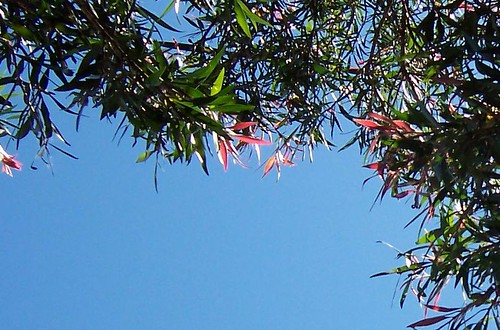
Red-tipped tree leaves
(Clicking leads to embiggening)

Red-tipped leaves on some sort of eucalyptus tree. Don't ask me what sort. I ain't no botanist.

Extra photo, didn't quite make the grade.

Thursday, February 28, 2008

Moody views

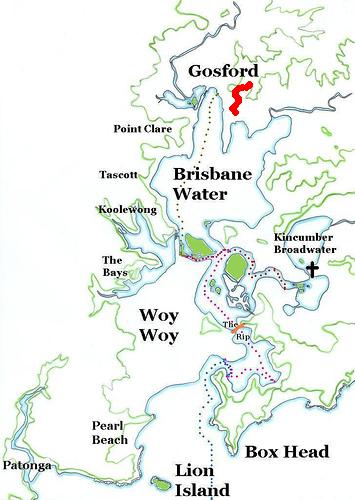
(East Gosford walkies #3 or thereabouts, map)

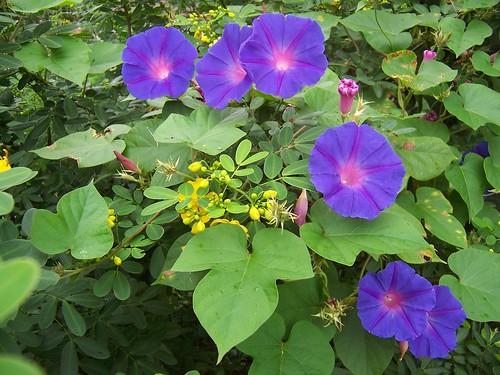
Purple & yellow flowers

The yellow flowers are everywhere around Brisbane Water, on large loose bushes. The purple ones are a climber that hangs over the wire fence along the railway line.

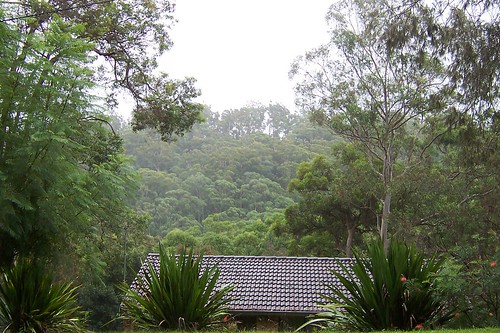
(Took this before the light went to hell. Right now it's gone all dark again, as dark as the third photo. Pissing down raining too. Been at it since all day. it nippy actually. Funny old weather for the last day of Spring. Usually I'd be blogging in me underpants and whinging about the heat.)

Anyways, I went into Gosford then tramped up and over Henry Parry Drive and into East Gosford. Went to a street there I'd seen from when I found the old quarry. Between it and the quarry is a small valley and across the valley I could see a street. So today I walked it.


View of Rumbalara Reserve from Bay View Avenue East Gosford

Rumbalara Reserve from Bay View Avenue East Gosford. Nice street Bay View. Not too badly infested with the 1970s buildings, bush and water views on one side, water views on t'other side, and bush up the back.


The Entrance Road & mangroves from Bay View Avenue East Gosford

This bay doesn't have a name in my 2006 street directory. Let's just call it Punt Bridge Bay because you can see it from Punt Bridge as you drive along The Entrance Road to Bloody Erina (Erina Fair).

The grassed bit on the lower left hand of the photo is Hylton Moore Park soccer oval. The trees around the bay are mangroves. The houses on the other side of the water are the Sun Valley Road area off Avoca Drive near Ironbark Point. The hills behind them are part of Kincumba Mountain.


View from Bay View Avenue East Gosford 1

The hill in a line with the road is Saratoga. The tree on the right of the photo is obscuring Woy Woy. The low bit to the left of Saratoga is Yattalunga. The hill behind is Killcare Heights (beyond which is the Tasman Sea).

Behind the tree in the left foreground is Green Point and Kincumba Mountain slopes off to the left edge of the picture.

The street was bloody steep. And it was raining. I muttered and grumbled and whinged my way up it. Turned round when I got to the top and had a look at the views. Bloody excellent. No doubt you could see all the way to Barrenjoey Head on a clear day but I rather like the misty views of a rainy day.


TS Hawkesbury & Point Clare from Bay View Avenue East Gosford

I particularly like this one from the other side of the road. TS Hawkesbury & Point Clare seen across The Broadwater, with Kariong and the ridges folding in behind on their way to Mooney Mooney Creek and the Great North Walk.


Fagans Bay from Bay View Avenue East Gosford

The Broadwater, Fagans Bay (right) and the houses along its southern edge. Fagans Bay is separated from The Broadwater by the railway line as it comes into Gosford from Woy Woy.

Up the top of the street it was flat and the houses were back from the road. The rain spattered on my brolly and the wind shook the tall gums. I could see Rumbalara Reserve across the valley and hear a bell bird in a tree somewhere. Despite being quite close to the traffic down on York Street, it was quiet and isolated.


Bay View Avenue East Gosford

Ignore the ferry routes. Look at the red wiggly line up the top. That's Bay View Avenue. It's way up on a ridge and the view from up there goes right down Brisbane Water.

Wednesday, February 27, 2008

The bulldozer cometh

(Random walkies in Woy Woy)

I was bloody lazy yesterday. Too bloody lazy to walk. Too bloody lazy to do bung something up here. Laid on the sofa most of the day yawning and watching those nice big storms. Nice light show here but they made mincemeat of Western Sydney again. Anyways, here's the latest bits of Woy Woy to be menaced by the bulldozer.


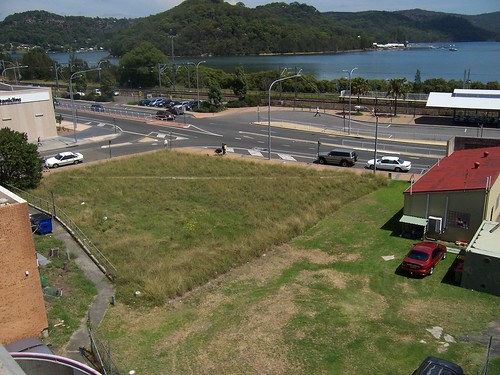
Corner of Railway Street & George Street Woy Woy

Empty block next to Deepwater Plaza and across the road from the railway station. Corner of Railway Street & George Street. The local rag's just announced plans for the multi-storey carpark (from which this photo was taken) to be extended and the only logical extension is onto that block. It'll make a hell of a difference to the street.

That's Woy Woy Bay in the right background and Phegans Bay in the left background. The red roof on the right edge of the picture is the bottle shop.


Cnr Ocean Beach Road & Pioneer Road Umina

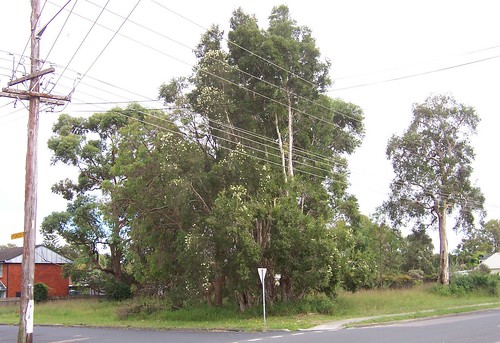
Bit of bush on the corner Ocean Beach Road & Pioneer Road Umina, just near the service station. Lorikeet fans should note that flowering gum is the same type as they feed on all over the peninsula.

Snippet of bushland on the corner of the main road. Two 1940s houses got demolished next door and I'm thinking that land and this snippet is going to be sprouting more bloody villas soon.


Bits and blobs

Steve's Woy Woy photos are up and he's added some new articles and a spiffy new forum.

Pop over and leave a comment on Olive's blob. She's been blobbing over a year now. Pretty good going for a 108 year old.


Right. I'm off out onto the balcony to await for today's storm.

Thursday, February 21, 2008

The frog remains the same

(Random walkies in Woy Woy)

Tuesday and Wednesday I spent on the sofa with a blanket feeling sorry for myself. The guts had a brief relapse but they and I are back on deck. Bit of sun this morning and it was over 25 degrees as well, so I wandered down to the hardware via the beach.


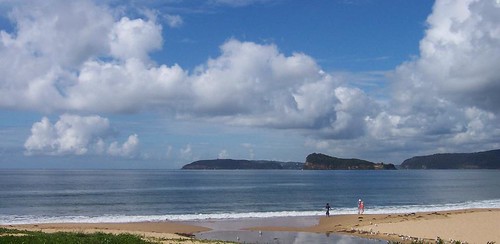
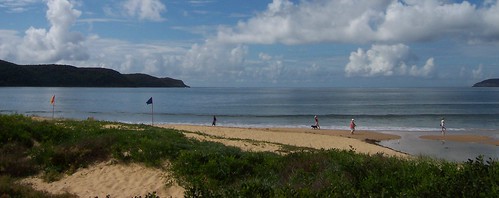
Barrenjoey Head & Lion Island from Umina Beach

Barrenjoey Head & Lion Island from Umina Beach. The clouds piled up over Pittwater and Lion Island this morning.


Box Head from Umina Beach

Box Head from Umina Beach. Beach walkers taking advantage of the sun. It's gone again now and was barely out when I took these.

Going down Trafalgar Avenue to the beach I noticed the old wall rock-and-cement fountain has been taken off the front of that block of 1960s flats called Westcourt. The faded green cement frog is still there though and continues to make a handy whatsit on which to dry a bathmat in the sun.


Sophy's place to Webb's Flat to Woy Woy

I acknowledge that I am blogging from Guringai/Darkinjung land and that the Guringai/Darkinjung are the traditional owners of Woy Woy*.

Michael and Steve commented about the age of the oldest buildings on the Woy Woy Peninsula. (Thanks for the info on those shops, guys.) I haven't blogged much about the beginning of whitefella Woy Woy so here it is.

In March 1788, just a couple of months after the First Fleet arrived in Sydney, Governor Philip and a few of his men came up from Sydney cove for a decko at Broken Bay. They made brief contact with the local people, decided Brisbane Water was of no use to them and went back to Sydney.

Woy Woy was James Webb's farm in the beginning of white inhabitation. Webb arrived in 1823 and by 1834 had bought the land Bustling Downtown Woy Woy stands mostly on.

Webb and Sophy, a Guringai woman, had a daughter. Her name was Charlotte. She was born around 1828, died in 1913 and is buried at Bradys Gully.

For a long time Woy Woy wasn't developed much, just a few houses and ship-yards. Going to the shops meant a vigorous row or a gentle ferry ride up to Gosford. From what I can make out, shops and pubs only started appearing in Woy Woy when the railway came in 1888.

After the railway came there was a population boom then another in the 1940s-1950s, again the 1970s and again now. With populations booms you get building booms and of course those buildings are what forms the visual character of a town.

The Woy Woy pub is 1897 but most of the oldest commercial buildings seem to be long gone, having been wooden and having vanished by the 1940s.

Noonan's is 1914. Looks older but the date is on the front and is confirmed in Strom (excellent local historian).

Ettalong was founded in 1830 according to the sign in Picnic Parade (end of the treed traffic island, facing Blackwall Mountain). I'm hoping to get a firmer date for that pair of old shops in Ettlaong but it's looks like it'll be a tough nut to crack. Haven't found any references yet or seen them in any old photos.


Anyone with old photos of or info about Woy Woy and the Brisbane Water area is more than welcome to post them and it in the comments.


Darkinjung Nation

More local history at the library.


* Hope I got that right. It's part of my post-Sorry efforts. So far I haven't found a lot of info about pre-1788 in the local histories, not even which is the correct name for the Woy Woy people. It's very frustrating.

Thursday, February 14, 2008

A patch of blue

Full transcript of the Prime Minister's Sorry speech on 13th February 2008


(Random walkies in Woy Woy)

Pink flowering tree

There was black black clouds over Woy Woy this morning. But this afternoon it suddenly came over sunny and I zotted out with the camera. There's heaps of these trees all over the Peninsula and all round Brisbane Water. No scent to the flowers unfortunately but you can't everything.
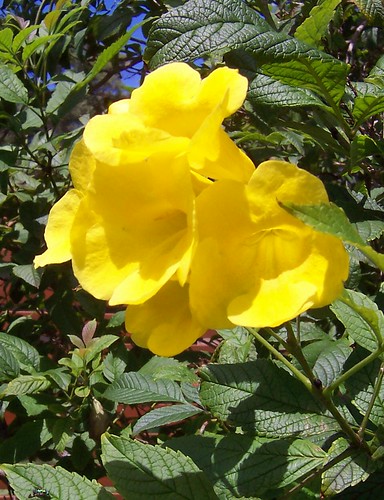

Yellow flowers

Soft yellow flowers on a tall bush. No idea what they're called.
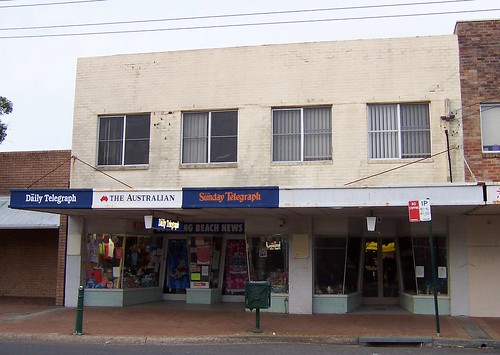

Old shops Ocean View Road Ettalong

This pair of old shops in in Ettalong near the Excrescence and next door to the former Post Office. They are the oldest shops I know of on the Woy Woy Peninsula.

The top part of the building looks like 1940s maybe on the right hand window sills and the row of small ventilation gaps between the bricks across the top of the windows. The windows themselves are 1970s or 80s of course. The original top part would most likely have had tall narrow sash windows like Noonan's and possibly a wee balcony.

Look at the shop windows, there's a display case on either side and sort of passages between them to the doors. Don't see many shops like that around any more. My Big Book of Old Buildings has some commercial architecture in it but only one example of a shop window like these. It's from 1905 so I'm putting these shops at circa 1905.

A gander round the back reveals a row of dunnies, also circa 1905, and a staircase up to the top of the building. The pile of domestic furniture at the bottom of the staircase suggests there's a flat up there.

I'd chuck you in a close-up of the windows but Flickr is having indigestion. Instead, have a gander at where Ettalong is on this map.)


Local linkage

Been meaning to post those 2 for a while. They're Henderson family history from a commenter on the Veteran Hall post. The Hendersons built Veteran Hall, the long-gone house the Saratoga ferry wharf is named after.

Geary Henderson family history - Henderson family history from a 1796 Australian-born son of convicts to 2006 births

Neolene's research - ditto, with article about Robert Henderson


World wide walkers

Some new walkies links, courtesy of Jen at Walking Berkeley.

Walking Dunfermline - Rob, in Scotland

Walking Hither Green, Wulf in South East London

Walking Pittsburgh, Matt and Tiffany, in America

Walking the Streets of Forest Hill, another Rob's London walkies

Walking San Francisco, Eric in California


Full transcript of the Prime Minister's Sorry speech on 13th February 2008

Thanks to Vastiel for the transcript link and to Jimmy Little, a Straylyan abroad, for the Beeb link and the info that the Sorry speech made "above-the-fold front page news on the New York Times".

American readers should note that the speech was made to our national Parliment in Canberra.

"I MOVE that today we honour the Indigenous peoples of this land, the oldest continuing cultures in human history.

We reflect on their past mistreatment. We reflect in particular on the mistreatment of those who were Stolen Generations—this blemished chapter in our nation’s history.

The time has now come for the nation to turn a new page in Australia’s history by righting the wrongs of the past and so moving forward with confidence to the future.

We apologise for the laws and policies of successive Parliaments and governments that have inflicted profound grief, suffering and loss on these our fellow Australians. We apologise especially for the removal of Aboriginal and Torres Strait Islander children from their families, their communities and their country.

For the pain, suffering and hurt of these Stolen Generations, their descendants and for their families left behind, we say sorry.

To the mothers and the fathers, the brothers and the sisters, for the breaking up of families and communities, we say sorry.

And for the indignity and degradation thus inflicted on a proud people and a proud culture, we say sorry.

We the Parliament of Australia respectfully request that this apology be received in the spirit in which it is offered as part of the healing of the nation.

For the future we take heart; resolving that this new page in the history of our great continent can now be written.

We today take this first step by acknowledging the past and laying claim to a future that embraces all Australians.

A future where this Parliament resolves that the injustices of the past must never, never happen again. A future where we harness the determination of all Australians, Indigenous and non-Indigenous, to close the gap that lies between us in life expectancy, educational achievement and economic opportunity.

A future where we embrace the possibility of new solutions to enduring problems where old approaches have failed. A future based on mutual respect, mutual resolve and mutual responsibility. A future where all Australians, whatever their origins, are truly equal partners, with equal opportunities and with an equal stake in shaping the next chapter in the history of this great country, Australia.

There comes a time in the history of nations when their peoples must become fully reconciled to their past if they are to go forward with confidence to embrace their future. Our nation, Australia, has reached such a time. That is why the parliament is today here assembled: to deal with this unfinished business of the nation, to remove a great stain from the nation’s soul and, in a true spirit of reconciliation, to open a new chapter in the history of this great land, Australia.

Last year I made a commitment to the Australian people that if we formed the next government of the Commonwealth we would in parliament say sorry to the stolen generations. Today I honour that commitment. I said we would do so early in the life of the new parliament.

Again, today I honour that commitment by doing so at the commencement of this the 42nd parliament of the Commonwealth. Because the time has come, well and truly come, for all peoples of our great country, for all citizens of our great Commonwealth, for all Australians—those who are Indigenous and those who are not—to come together to reconcile and together build a new future for our nation.

Some have asked, "Why apologise?" Let me begin to answer by telling the parliament just a little of one person’s story—an elegant, eloquent and wonderful woman in her 80s, full of life, full of funny stories, despite what has happened in her life’s journey, a woman who has travelled a long way to be with us today, a member of the stolen generation who shared some of her story with me when I called around to see her just a few days ago.

Nanna Nungala Fejo, as she prefers to be called, was born in the late 1920s. She remembers her earliest childhood days living with her family and her community in a bush camp just outside Tennant Creek. She remembers the love and the warmth and the kinship of those days long ago, including traditional dancing around the camp fire at night. She loved the dancing.

She remembers once getting into strife when, as a four-year-old girl, she insisted on dancing with the male tribal elders rather than just sitting and watching the men, as the girls were supposed to do.

But then, sometime around 1932, when she was about four, she remembers the coming of the welfare men. Her family had feared that day and had dug holes in the creek bank where the children could run and hide. What they had not expected was that the white welfare men did not come alone.

They brought a truck, two white men and an Aboriginal stockman on horseback cracking his stockwhip. The kids were found; they ran for their mothers, screaming, but they could not get away. They were herded and piled onto the back of the truck. Tears flowing, her mum tried clinging to the sides of the truck as her children were taken away to the Bungalow in Alice, all in the name of protection.

A few years later, government policy changed. Now the children would be handed over to the missions to be cared for by the churches. But which church would care for them? The kids were simply told to line up in three lines. Nanna Fejo and her sister stood in the middle line, her older brother and cousin on her left.

Those on the left were told that they had become Catholics, those in the middle Methodists and those on the right Church of England. That is how the complex questions of post-reformation theology were resolved in the Australian outback in the 1930s. It was as crude as that.

She and her sister were sent to a Methodist mission on Goulburn Island and then Croker Island. Her Catholic brother was sent to work at a cattle station and her cousin to a Catholic mission.
Nanna Fejo’s family had been broken up for a second time.

She stayed at the mission until after the war, when she was allowed to leave for a prearranged job as a domestic in Darwin. She was 16. Nanna Fejo never saw her mum again. After she left the mission, her brother let her know that her mum had died years before, a broken woman fretting for the children that had literally been ripped away from her.

I asked Nanna Fejo what she would have me say today about her story. She thought for a few moments then said that what I should say today was that all mothers are important. And she added: ‘Families—keeping them together is very important. It’s a good thing that you are surrounded by love and that love is passed down the generations.

That’s what gives you happiness.’ As I left, later on, Nanna Fejo took one of my staff aside, wanting to make sure that I was not too hard on the Aboriginal stockman who had hunted those kids down all those years ago. The stockman had found her again decades later, this time himself to say, ‘Sorry.’ And remarkably, extraordinarily, she had forgiven him.

Nanna Fejo’s is just one story. There are thousands, tens of thousands of them: stories of forced separation of Aboriginal and Torres Strait Islander children from their mums and dads over the better part of a century. Some of these stories are graphically told in Bringing them home, the report commissioned in 1995 by Prime Minister Keating and received in 1997 by Prime Minister Howard.

There is something terribly primal about these firsthand accounts. The pain is searing; it screams from the pages. The hurt, the humiliation, the degradation and the sheer brutality of the act of physically separating a mother from her children is a deep assault on our senses and on our most elemental humanity.

These stories cry out to be heard; they cry out for an apology. Instead, from the nation’s parliament there has been a stony, stubborn and deafening silence for more than a decade; a view that somehow we, the parliament, should suspend our most basic instincts of what is right and what is wrong; a view that, instead, we should look for any pretext to push this great wrong to one side, to leave it languishing with the historians, the academics and the cultural warriors, as if the stolen generations are little more than an interesting sociological phenomenon.

But the stolen generations are not intellectual curiosities. They are human beings, human beings who have been damaged deeply by the decisions of parliaments and governments. But, as of today, the time for denial, the time for delay, has at last come to an end.

The nation is demanding of its political leadership to take us forward. Decency, human decency, universal human decency, demands that the nation now step forward to right an historical wrong. That is what we are doing in this place today.

But should there still be doubts as to why we must now act, let the parliament reflect for a moment on the following facts: that, between 1910 and 1970, between 10 and 30 per cent of Indigenous children were forcibly taken from their mothers and fathers; that, as a result, up to 50,000 children were forcibly taken from their families; that this was the product of the deliberate, calculated policies of the state as reflected in the explicit powers given to them under statute; that this policy was taken to such extremes by some in administrative authority that the forced extractions of children of so-called ‘mixed lineage’ were seen as part of a broader policy of dealing with ‘the problem of the Aboriginal population’.

One of the most notorious examples of this approach was from the Northern Territory Protector of Natives, who stated: "Generally by the fifth and invariably by the sixth generation, all native characteristics of the Australian aborigine are eradicated.

"The problem of our half-castes— to quote the protector— will quickly be eliminated by the complete disappearance of the black race, and the swift submergence of their progeny in the white ... "

The Western Australian Protector of Natives expressed not dissimilar views, expounding them at length in Canberra in 1937 at the first national conference on Indigenous affairs that brought together the Commonwealth and state protectors of natives.

These are uncomfortable things to be brought out into the light. They are not pleasant. They are profoundly disturbing. But we must acknowledge these facts if we are to deal once and for all with the argument that the policy of generic forced separation was somehow well motivated, justified by its historical context and, as a result, unworthy of any apology today.

Then we come to the argument of intergenerational responsibility, also used by some to argue against giving an apology today. But let us remember the fact that the forced removal of Aboriginal children was happening as late as the early 1970s.

The 1970s is not exactly a point in remote antiquity. There are still serving members of this parliament who were first elected to this place in the early 1970s. It is well within the adult memory span of many of us. The uncomfortable truth for us all is that the parliaments of the nation, individually and collectively, enacted statutes and delegated authority under those statutes that made the forced removal of children on racial grounds fully lawful.

There is a further reason for an apology as well: it is that reconciliation is in fact an expression of a core value of our nation—and that value is a fair go for all. There is a deep and abiding belief in the Australian community that, for the stolen generations, there was no fair go at all. There is a pretty basic Aussie belief that says that it is time to put right this most outrageous of wrongs.

It is for these reasons, quite apart from concerns of fundamental human decency, that the governments and parliaments of this nation must make this apology—because, put simply, the laws that our parliaments enacted made the stolen generations possible.

We, the parliaments of the nation, are ultimately responsible, not those who gave effect to our laws. And the problem lay with the laws themselves. As has been said of settler societies elsewhere, we are the bearers of many blessings from our ancestors; therefore we must also be the bearer of their burdens as well. Therefore, for our nation, the course of
action is clear: that is, to deal now with what has become one of the darkest chapters in Australia’s history.

In doing so, we are doing more than contending with the facts, the evidence and the often rancorous public debate. In doing so, we are also wrestling with our own soul. This is not, as some would argue, a black-armband view of history; it is just the truth: the cold, confronting, uncomfortable truth—facing it, dealing with it, moving on from it. Until we fully confront that truth, there will always be a shadow hanging over us and our future as a fully united and fully reconciled people. It is time to reconcile. It is time to recognise the injustices of the past. It is time to say sorry. It is time to move forward together.

To the stolen generations, I say the following: as Prime Minister of Australia, I am sorry. On behalf of the government of Australia, I am sorry. On behalf of the parliament of Australia, I am sorry. I offer you this apology without qualification.

We apologise for the hurt, the pain and suffering that we, the parliament, have caused you by the laws that previous parliaments have enacted. We apologise for the indignity, the degradation and the humiliation these laws embodied.

We offer this apology to the mothers, the fathers, the brothers, the sisters, the families and the communities whose lives were ripped apart by the actions of successive governments under successive parliaments. In making this apology, I would also like to speak personally to the members of the stolen generations and their families: to those here today, so many of you; to those listening across the nation—from Yuendumu, in the central west of the Northern Territory, to Yabara, in North Queensland, and to Pitjantjatjara in South Australia.

I know that, in offering this apology on behalf of the government and the parliament, there is nothing I can say today that can take away the pain you have suffered personally. Whatever words I speak today, I cannot undo that. Words alone are not that powerful; grief is a very personal thing. I ask those non-indigenous Australians listening today who may not fully understand why what we are doing is so important to imagine for a moment that this had happened to you.

I say to honourable members here present: imagine if this had happened to us. Imagine the crippling effect. Imagine how hard it would be to forgive. My proposal is this: if the apology we extend today is accepted in the spirit of reconciliation, in which it is offered, we can today resolve together that there be a new beginning for Australia. And it is to such a new beginning that I believe the nation is now calling us.

Australians are a passionate lot. We are also a very practical lot. For us, symbolism is important but, unless the great symbolism of reconciliation is accompanied by an even greater substance, it is little more than a clanging gong. It is not sentiment that makes history; it is our actions that make history. Today’s apology, however inadequate, is aimed at righting past wrongs. It is also aimed at building a bridge between Indigenous and non-Indigenous Australians—a bridge based on a real respect rather than a thinly veiled contempt.

Our challenge for the future is to cross that bridge and, in so doing, to embrace a new partnership between Indigenous and non-Indigenous Australians—to embrace, as part of that partnership, expanded Link-up and other critical services to help the stolen generations to trace their families if at all possible and to provide dignity to their lives.

But the core of this partnership for the future is to close the gap between Indigenous and non-Indigenous Australians on life expectancy, educational achievement and employment opportunities.

This new partnership on closing the gap will set concrete targets for the future: within a decade to halve the widening gap in literacy, numeracy and employment outcomes and opportunities for Indigenous Australians, within a decade to halve the appalling gap in infant mortality rates between Indigenous and non-Indigenous children and, within a generation, to close the equally appalling 17-year life gap between Indigenous and non-Indigenous in overall life expectancy.

The truth is: a business as usual approach towards Indigenous Australians is not working. Most old approaches are not working. We need a new beginning—a new beginning which contains real measures of policy success or policy failure; a new beginning, a new partnership, on closing the gap with sufficient flexibility not to insist on a one-size-fits-all approach for each of the hundreds of remote and regional Indigenous communities across the country but instead allowing flexible, tailored, local approaches to achieve commonly-agreed national objectives that lie at the core of our proposed new partnership; a new beginning that draws intelligently on the experiences of new policy settings across the nation. However, unless we as a parliament set a destination for the nation, we have no clear point to guide our policy, our programs or our purpose; we have no centralised organising principle.

Let us resolve today to begin with the little children—a fitting place to start on this day of apology for the stolen generations. Let us resolve over the next five years to have every Indigenous four-year-old in a remote Aboriginal community enrolled in and attending a proper early childhood education centre or opportunity and engaged in proper preliteracy and prenumeracy programs.

Let us resolve to build new educational opportunities for these little ones, year by year, step by step, following the completion of their crucial preschool year. Let us resolve to use this systematic approach to build future educational opportunities for Indigenous children to provide proper primary and preventive health care for the same children, to begin the task of rolling back the obscenity that we find today in infant mortality rates in remote Indigenous communities—up to four times higher than in other communities.

None of this will be easy. Most of it will be hard—very hard. But none of it is impossible, and all of it is achievable with clear goals, clear thinking, and by placing an absolute premium on respect, cooperation and mutual responsibility as the guiding principles of this new partnership on closing the gap.

The mood of the nation is for reconciliation now, between Indigenous and non-Indigenous Australians. The mood of the nation on Indigenous policy and politics is now very simple. The nation is calling on us, the politicians, to move beyond our infantile bickering, our point-scoring and our mindlessly partisan politics and to elevate this one core area of national responsibility to a rare position beyond the partisan divide. Surely this is the unfulfilled spirit of the 1967 referendum. Surely, at least from this day forward, we should give it a go.

Let me take this one step further and take what some may see as a piece of political posturing and make a practical proposal to the opposition on this day, the first full sitting day of the new parliament. I said before the election that the nation needed a kind of war cabinet on parts of Indigenous policy, because the challenges are too great and the consequences are too great to allow it all to become a political football, as it has been so often in the past.

I therefore propose a joint policy commission, to be led by the Leader of the Opposition and me, with a mandate to develop and implement—to begin with—an effective housing strategy for remote communities over the next five years. It will be consistent with the government’s policy framework, a new partnership for closing the gap.

If this commission operates well, I then propose that it work on the further task of constitutional recognition of the first Australians, consistent with the longstanding platform commitments of my party and the pre-election position of the opposition.

This would probably be desirable in any event because, unless such a proposition were absolutely bipartisan, it would fail at a referendum. As I have said before, the time has come for new approaches to enduring problems. Working constructively together on such defined projects would, I believe, meet with the support of the nation. It is time for fresh ideas to fashion the nation’s future.

Mr Speaker, today the parliament has come together to right a great wrong. We have come together to deal with the past so that we might fully embrace the future. We have had sufficient audacity of faith to advance a pathway to that future, with arms extended rather than with fists still clenched. So let us seize the day.

Let it not become a moment of mere sentimental reflection. Let us take it with both hands and allow this day, this day of national reconciliation, to become one of those rare moments in which we might just be able to transform the way in which the nation thinks about itself, whereby the injustice administered to the stolen generations in the name of these, our parliaments, causes all of us to reappraise, at the deepest level of our beliefs, the real possibility of reconciliation writ large: reconciliation across all Indigenous Australia; reconciliation across the entire history of the often bloody encounter between those who emerged from the Dreamtime a thousand generations ago and those who, like me, came across the seas only yesterday; reconciliation which opens up whole new possibilities for the future.

It is for the nation to bring the first two centuries of our settled history to a close, as we begin a new chapter. We embrace with pride, admiration and awe these great and ancient cultures we are truly blessed to have among us—cultures that provide a unique, uninterrupted human thread linking our Australian continent to the most ancient prehistory of our planet.

Growing from this new respect, we see our Indigenous brothers and sisters with fresh eyes, with new eyes, and we have our minds wide open as to how we might tackle, together, the great practical challenges that Indigenous Australia faces in the future.

Let us turn this page together: Indigenous and non-Indigenous Australians, government and opposition, Commonwealth and state, and write this new chapter in our nation’s story together. First Australians, First Fleeters, and those who first took the oath of allegiance just a few weeks ago. Let’s grasp this opportunity to craft a new future for this great land: Australia. I commend the motion to the House."
Wednesday, February 13, 2008

Sorry

Sorry Day 2008


At 9AM this morning, the Prime Minister of Australia Kevin Rudd apologised on the behalf of the Australian Government to Aboriginal people. The Aborigines are the native people of Australia who were in possession of the land before white people came to settle in 1788.

He apologised for their treatment at the hands of past Australian Governments, particularly for the Stolen Generation.


This apology was a good thing.


A snippet from SMH:

"Australia has formally apologised to the stolen generations with Prime Minister Kevin Rudd reading a speech in Federal Parliament this morning.

The apology was read at 9am to the minute, as the first action of the second sitting day of the 42nd Parliament of Australia.

Both Mr Rudd and Indigenous Affairs Minister Jenny Macklin received a standing ovation as they entered the Great Hall before the Prime Minister delivered the speech.

The reading of the 361-word apology was completed by 9.03am and was watched by hundreds of parliamentarians, former prime ministers and representatives of the indigenous community.

Former prime ministers Paul Keating, Bob Hawke, Gough Whitlam and Malcolm Fraser and Sir William Deane were all seated on the floor of the Parliament as well as 17 people representing the stolen generation.
...
In another address directly after reading the apology, Mr Rudd spoke of removing a "stain from the soul of Australia".
..."


Mr Rudd's speech received a standing ovation at the Redfern Community Centre, where hundreds gathered.

Residents, workers, families, students and Sydney's Lord Mayor Clover Moore braved the rain to watch the speech via a large outdoor screen.

David Page, composer with the indigenous dance group Bangarra Dance Theatre, said he liked the fact that Mr Rudd made a personal apology.

"It was very moving to see a prime minister with a bit of heart. I loved it when he said he was sorry. There was just something personal about it. It's very hard for a prime minister to be personal," he said.

Enid Williams, 72, who was brought up on a mission in north Queensland after her father was forcibly removed from his family, said she was happy with Mr Rudd's speech, but said it was now important to look to the future.

"I'm 72. The main thing is the young people, to give them a better future."


At Martin Place in Sydney, hundreds of Sydneysiders from all walks of life gathered to watch the Sorry Day celebrations holding Australian, Aboriginal and Torres Strait Islander flags.

Men and women in business suits, schoolchildren and other passers-by of all different backgrounds cried, smiled and stood in respect as they listened to Mr Rudd apologise."

Can't find the transcript of the whole speech but there's a full audio of it here and you can send a message to the PM here at the PM's official website.


My personal apology

I am sorry for Terra Nullius, the taking of Aboriginal land in 1788 that started it all.

I am sorry for all the racism and rip-offs I and my fellow Australians have put upon the Aborigines in the 220 years since 1788.

I am sorry most of all for the Stolen Generation, for the forcible removal of children from their Aboriginal parents on the flimsiest of excuses and sometimes without any excuse, for no other reason than race. No matter what advantages those children may or may not have gained by their removal, it was wrong.


Read all about it

Kevin Rudd says sorry

VIDEO of the Sorry speech (if link not working, go via link above)

AUDIO of the Sorry speech

Day of healing for Aboriginal leaders

Speech gets standing ovation in Redfern

Martin Place crowd weep for the Stolen Generations

Backs turned on Nelson's response

Ancient tensions fail to mar apology

Sorry speech was maginificent

Thunderous appause in Sydney for Rudd's speech

Long queue to witness Rudd speech

Bondi BBQ for live apology

Britain urged to back Rudd's apology

A nation apologises

Family saddened by apology that came too late

A nation shocked by tales of sorrow

Protest against intervention

Welcome ritual marks opening of Parliment

Tears for those who vanished never to return again

Mother's regret carried to the grave

Finally their voices will be heard


Have your say

Rate the apology

Send a message to the PM


Rudd's speech on screens at east Gosford posted on Flickr by Keith Pitty


If anyone has the full transcript of Rudd's speech, feel free to paste it into the comments.